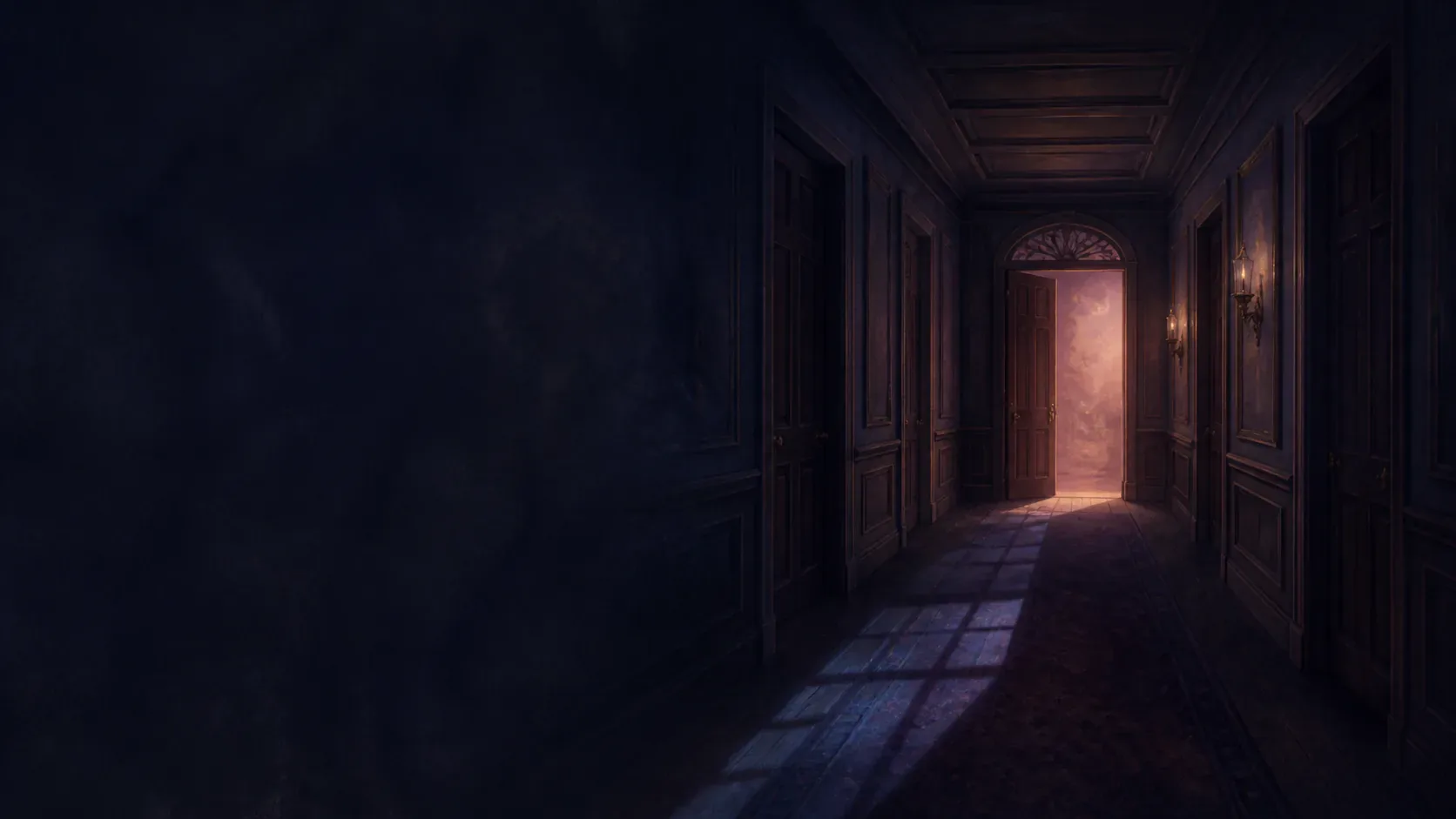
Dream symbol · Places & settings
What Does Dreaming About a Hallway Mean?
Explore a hallway dream through building type, origin, destination, doors, length, lighting, obstacles, movement, arrival, and waking context.
A short answer
A hallway dream can connect to moving between rooms, searching for a destination, choosing a door, waiting, following someone, or navigating a familiar building. The building type, where you started, intended destination, doors, obstacles, movement, and whether you arrived matter more than a fixed meaning about transition or limbo.
What a hallway dream can mean
A hallway dream has no single proven universal meaning. A corridor is usually a route between rooms, so the useful questions concern where you started, where you intended to go, and what happened along the way. Searching, escaping, delivering something, waiting, following, and casually walking create different stories.
Hallways are often described as automatic symbols of transition, uncertainty, or limbo. Those associations may fit a particular scene, but they are not facts about every corridor. A hospital hallway, school corridor, hotel passage, office floor, and hallway at home carry different rules and memories.
Begin with the event. Identify the task, direction, people, doors, obstacles, and outcome. A short familiar passage to the kitchen differs from an endless institutional corridor with no visible exit, even when both feel tense.
Building type and familiarity shape the hallway dream meaning
What kind of building contained the hallway? A home, apartment block, school, hospital, hotel, office, museum, station, ship, theatre, shopping centre, or unknown structure changes what you expect to find behind each door. Public and private routes also differ in permission.
Familiarity may come from floor material, paint, windows, smell, sound, door numbers, or the shape of a corner rather than an exact plan. A corridor can feel unquestionably like your old school while leading into your present workplace. Record what made it recognizable and what did not belong.
Also ask who normally used the route. A private family passage, staff-only corridor, hotel floor open to guests, hospital route controlled by workers, and school hall between classes organize people differently. Were you entitled to be there, visiting, employed, lost, or trying to avoid notice? Access rules can explain tension that a generic transition reading would miss.
Notice whether the corridor was meant for everyday movement, emergency access, visitors, deliveries, patients, performers, or people waiting for permission.
Research on event memory supports the importance of spatial context, while dream research supports the inclusion and recombination of waking memories. That does not make the dreamed hallway a factual map. It gives a reason to examine the mixture rather than treating every invented door as a hidden memory.
Origin destination and direction give the route a purpose
Which room or situation were you leaving? A bedroom, meeting, classroom, operating room, party, locked room, or outdoor entrance gives the first step a different reason. Leaving voluntarily differs from being sent out, escaping, or realizing you are already in the corridor.
Where were you trying to arrive? A front door, bathroom, office, loved one’s room, exit sign, lift, staircase, platform, or unknown source of sound can organize the entire scene. If you had no destination, were you exploring, waiting for instructions, or trying to understand the building?
Direction can change. You may follow signs, turn back, choose a side passage, return to the same corner, or be redirected by another person. Note why the plan changed. The route can resemble a waking transition only when the specific constraints and choices fit.
Doors labels and rooms create choices along the way
How many doors appeared, and how were they distinguished? Names, numbers, colours, windows, sounds, light underneath, a familiar handle, or a person waiting nearby can make one door relevant. A row of identical doors creates a different search problem from one clearly marked destination.
Opening, knocking, listening, checking a sign, using a key, and walking past are separate actions. A locked door makes access the immediate issue. A door that opens to the wrong room makes the building unreliable. Neither event proves that a real secret or opportunity exists.
Who controlled the doors? Staff, family, strangers, a guard, a child, or nobody may decide where you can go. You may also lock a door behind you or hold one open for someone else. These details show permission and responsibility inside the dream without revealing anyone’s waking intentions.
Length turns and repetition alter progress
A short corridor can stretch as you walk. Corners can return you to the start, branches can multiply, and an exit can remain the same distance away. Describe the rule. Endless length, repeated loops, and constantly changing junctions create different failures of navigation.
Repetition invites a strategy question. Did you keep using the same route, mark a wall, count doors, call out, consult a map, follow another person, or stop? Changing the approach differs from moving faster through the same loop. The response may be more useful than calling the hallway a symbol of being stuck.
Time may also behave strangely. You may know that a meeting starts soon, believe you have walked for hours, or watch a clock remain unchanged. Keep dream time separate from waking prediction. The scene does not forecast a delay or missed event.
Light surfaces width and sound affect movement
Was the hallway bright, dim, flickering, windowless, sunlit, or lit only beneath doors? Visibility affects how you choose a route. A light at the far end can be an actual destination in the scene without becoming a universal spiritual symbol.
Width and surface matter. A broad carpeted hotel corridor, narrow service passage, tiled hospital hall, sloping tunnel, flooded walkway, soft floor, or low ceiling changes pace and balance. Note whether you could pass another person, carry an object, turn around, or see the walls.
Sound can guide or confuse. Footsteps, voices, music, alarms, machinery, crying, silence, or your own echo may identify a room or suggest someone following. Ask whether the sound had a source and how you responded. Do not infer a hidden waking threat from dream sound alone.
Crowds damage and obstacles control passage
A busy hallway can slow movement, remove privacy, provide help, or establish that an event is underway. Who was moving in which direction? A queue, school changeover, hospital shift, evacuation, celebration, and anonymous crowd have different shared rules.
Furniture, boxes, locked gates, water, smoke, collapsed walls, cleaning equipment, animals, or construction can block part of the route. Identify whether the obstacle was accidental, maintained by someone, or part of the building’s design. Could it be moved, crossed, repaired, or avoided?
Responsibility matters. You may be clearing the path, warning others, squeezing past, waiting for staff, or choosing another corridor. A dream obstruction does not prove that a real exit is unsafe. Use actual building conditions and local safety procedures for waking decisions.
Walking running waiting and following are different actions
Pace shows the immediate demand. Walking with purpose, wandering, running from danger, rushing toward someone, moving quietly, crawling, and being carried do not share one meaning. Ask what set the pace and whether it helped.
Waiting can be active or imposed. You may sit outside a room for news, stand in a line, hide until footsteps pass, pause for a door to open, or decide not to continue. The expected event and your ability to leave distinguish patience from restriction.
Following someone can provide direction, dependence, curiosity, or pursuit depending on what occurred. Did they know you were there, give instructions, keep disappearing around corners, or walk beside you? The dream cannot establish what that person wants in waking life.
Arrival exit and retreat complete the hallway scene
Did you reach the intended room, find an exit, choose a different door, return to where you began, wake while moving, or remain between destinations? Arrival confirms that the corridor served its route function. An unexpected room may replace the original goal with a new task.
Retreat is not automatically failure. Turning back can follow new information, an unsafe route, a changed priority, or a deliberate choice. Staying in the hallway can also provide shelter, observation, or time to decide. Use the reason and result rather than ranking movement as good or bad.
Notice what happened immediately after the hallway. Who greeted you, what room opened, whether the task continued, and what you carried may explain why the route mattered. The corridor is one part of the event, not necessarily its conclusion.
Questions to guide your interpretation
- What kind of building contained the hallway, and what made it familiar or unfamiliar?
- Which room, event, or person was I leaving?
- Where was I trying to arrive, and why did I need to get there?
- Which door, label, sound, light, person, or sign changed the route?
- Was the hallway short, endless, looping, branching, narrowing, or changing shape?
- How did lighting, floor, width, ceiling, or sound affect movement?
- Which crowd, barrier, damage, or rule controlled passage?
- Was I walking, running, waiting, following, hiding, or being guided?
- Did I arrive, choose a room, retreat, find an exit, or remain in the hallway?
- Which recent building, journey between rooms, waiting period, media image, or memory may have supplied the scene?
For reflection, use the building, origin, destination, route conditions, doors, movement, and outcome. Respond to real blocked exits, damaged floors, smoke, or access concerns through waking evidence rather than treating the dream as a warning.
Further reading
Sources and context
- The Primacy of Spatial Context in the Neural Representation of EventsThe Journal of Neuroscience via PubMed Central
- Characteristics of the memory sources of dreamsPLOS ONE via PubMed Central
- Reactions to Dream Content: Continuity and Non-continuityFrontiers in Psychology via PubMed Central
Sources support factual background about dreaming and sleep. They do not validate a fixed symbolic meaning.