Common dream · Places & searching
What Does Dreaming About an Endless Corridor Mean?
Explore an endless corridor dream meaning through the destination, architecture, doors, direction, movement, companions, and final exit.
A short answer
An endless corridor dream can focus on searching, delay, repeated choices, unclear direction, restricted access, or movement that produces no arrival. The place the corridor belongs to, the destination you expected, the doors and signs you encountered, and whether you found an exit matter more than a fixed idea about being trapped.
What an endless corridor dream can mean
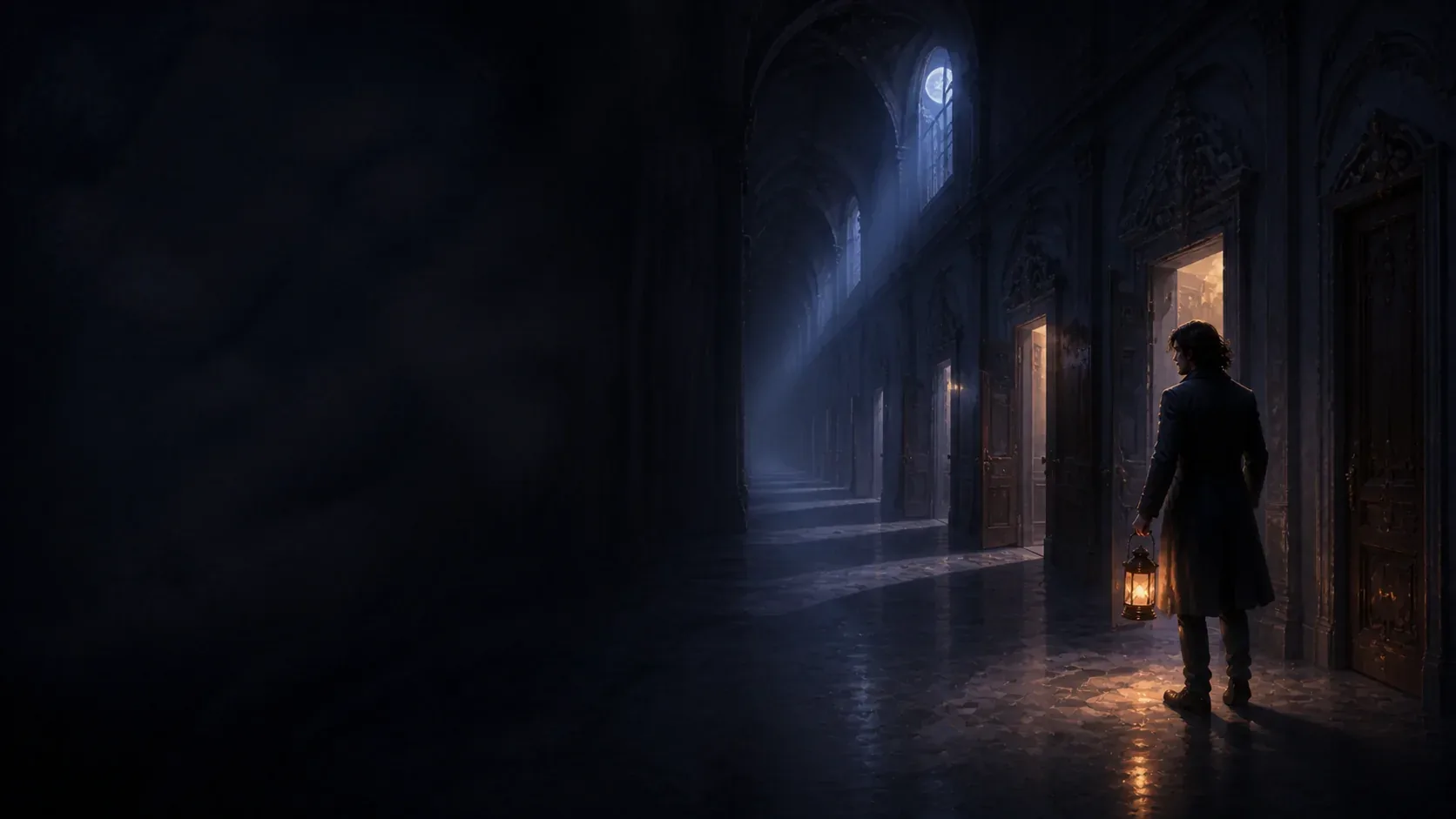
An endless corridor dream can turn searching, delay, repeated choice, restricted access, or unclear direction into architecture. You keep moving, yet the expected room, exit, person, or destination does not arrive. The scene may resemble a waking task that offers effort without a clear finish, but it can also reuse a real building, game, film, journey, or ordinary dream discontinuity.
Begin with the destination. Were you trying to find a bedroom, office, classroom, hospital room, bathroom, exit, person, event, or way home? An endless route matters differently when you are curious than when somebody needs urgent help.
Then describe what made it endless. The corridor may stretch visibly, loop back, add doors, change behind you, repeat one section, or seem normal until you realize how long you have walked. Did anyone else notice the impossible space?
There is no proven universal endless corridor dream meaning. The building, expected destination, direction, doors, companions, pace, emotional change, and ending provide more useful information than calling every hallway a transition.
The building shapes an endless corridor dream meaning
What kind of building seemed to contain the corridor? A school, hotel, hospital, office, apartment block, museum, prison, ship, station, palace, or unknown structure carries different rules. Even when no exterior appears, lighting, flooring, doors, sounds, furniture, and uniforms may suggest a place.
A familiar building can become inaccurate. Your old school may contain a hotel wing. A workplace may connect to your childhood home. Record what you recognized and what did not belong. The mismatch may come from several spatial memories combined in sleep.
Ownership affects access. Did you belong there, work there, visit, trespass, wake there unexpectedly, or receive instructions to wait? A corridor behind a staff-only door creates a different question from the main route everyone uses.
Condition also matters. The space may be clean, unfinished, flooded, abandoned, crowded, luxurious, narrow, dark, or brightly ordinary. Avoid turning darkness into danger automatically. Ask what the condition allowed you to see and do.
Doors rooms and signs create repeated choices
Count or describe the doors if you can. Were they identical, numbered, named, locked, open, changing, too small, or missing handles? A corridor with no doors restricts choice differently from one with too many.
What happened when you opened one? A room may be empty, familiar, occupied, outdoors, another corridor, or the place you just left. The result can turn each door into information, disappointment, danger, relief, or a temptation to keep checking.
Signs, maps, arrows, room numbers, and directories promise guidance. Did they remain readable? Perhaps the sign points both ways, the number changes, or the map shows no current location. A failed guide connects naturally to a map dream without proving that you lack direction in waking life.
One door may feel important before you know why. Did you avoid it, search for it, lose it, or find it only after giving up? Keep the feeling and the outcome separate. A powerful expectation does not establish a hidden message behind the door.
Walking running and waiting change the corridor dream
Pace shows how you relate to the distance. Walking may allow inspection. Running can create urgency while making the repeated architecture blur. Crawling, moving backward, riding, floating, or being carried changes who controls progress.
If you run, what are you moving toward or away from? A pursuer can make the dream resemble being chased, while an appointment or departing person creates another kind of deadline. If nothing follows, speed may come from a rule, fear of lateness, or the sense that stopping is unsafe.
Waiting can be active. You may expect an elevator, guide, doctor, interview, ceremony, or door to open. Does the corridor lengthen while you stand still? Does everyone else get called? A dream about delay should preserve what you were waiting for.
Stopping may reveal something movement hid: a side door, sound, window, floor plan, or another person. It can also make the corridor feel more threatening. Do not assume stopping represents insight or running represents avoidance. The dream’s consequences decide what each action did.
Looping changing and narrowing corridors alter the problem
A loop becomes clear when you recognize the same painting, carpet stain, window, person, clock, or damaged door. How many times did it take? Did you mark the wall, choose another turn, ask for help, or doubt your memory?
Changing corridors undermine landmarks. The ceiling may lower, walls may move, materials may shift, or a bright hotel may become a basement. Identify the first change and whether it felt gradual or abrupt. The scene may not have one stable building to solve.
A narrowing route changes the body relationship. Could you keep walking, turn sideways, crawl, or decide to return? A widening corridor can be equally disorienting when doors and walls move farther away. Scale affects access without carrying one fixed meaning.
If the corridor returns you to its beginning, notice whether you still have the same goal. You may repeat the route, choose a door, wait, break a rule, or decide that the original destination no longer matters. The response to repetition can become the main event.
Other people show who understands the space
Companions can share the search, disagree about direction, disappear at a turn, or insist that the corridor is normal. Who carries the map, key, light, or instruction? Did you trust their knowledge?
Strangers may act as staff, guides, residents, guards, guests, patients, students, or other lost people. Their role can clarify the building even when their identity remains unknown. A person who points to a door may help, mislead, or reveal that they are also searching.
Crowds change movement. Everyone may walk in one direction while you need to go against them. People may queue at identical doors, pass through walls, or vanish when called. Ask whether following the group brought you closer to your own destination.
Being alone can feel private, peaceful, exposed, or abandoned. Did you call out, hear footsteps, find evidence of recent activity, or prefer the quiet? Isolation does not assign fear until your response and the scene support it.
Familiar corridors can draw on spatial memory
Hotels, hospitals, schools, offices, apartment buildings, airports, and ships often require corridor navigation. A recent visit can supply carpet, lighting, sounds, turns, and doors. Older buildings may return with altered proportions.
Games and films also use repeating hallways to create suspense or puzzles. A camera angle, chase sequence, level design, or impossible architecture can become dream material. Note direct sources before assuming the space represents an abstract life stage.
Spatial memory does not need to be exact. A corridor may connect places that were never adjacent. Dreams can combine a childhood hallway, current office, and fictional hotel while making the route feel completely ordinary.
The hallway dream guide covers shorter passageways and thresholds. An endless corridor adds repetition or failed arrival, so the expected destination and changing rules deserve extra attention.
The exit and final room change the whole interpretation
Some corridor dreams end before arrival. If you woke while still moving, record the last available choice rather than imagining what waited ahead. An unfinished dream is not evidence of an unfinished waking task by itself.
An exit may lead outdoors, home, another building, water, a crowd, daylight, or the same corridor. Did you recognize it before opening? Relief can arrive from finding any way out, while disappointment can appear when the destination was somewhere specific.
The final room may answer the search or change it. You might find a person, empty chair, meeting, celebration, abandoned space, childhood scene, or ordinary storage room. What did you expect, and how did the reality differ?
You may also decide to stay. A bench, window, cafe, or quiet doorway can turn the passage into a place rather than an obstacle. Choosing not to continue can feel like rest, refusal, safety, loss, or a new plan depending on the dream.
Questions for interpreting an endless corridor dream
Choose the prompts that fit your route:
- What building did the corridor seem to belong to?
- Which person, room, event, exit, or destination was I trying to reach?
- What made the corridor endless, looping, changing, or difficult to map?
- How did doors, signs, windows, stairs, elevators, and landmarks behave?
- Was I walking, running, waiting, hiding, following, or being led?
- Who else understood the building, and did their guidance work?
- Did I feel urgency, curiosity, boredom, fear, frustration, relief, or determination?
- Which choice changed the route?
- What happened at the final door or last remembered moment?
- Which recent building, journey, game, film, task, or repeated process may have supplied the scene?
A useful interpretation preserves architecture and purpose. The question is not only why the corridor continued, but what you expected movement to accomplish.
What dream research can and cannot explain
Dream research supports links between waking experiences, concerns, emotions, and dream content. It also documents discontinuity, in which scenes, plots, people, and places may change or join without stable waking logic. An impossible corridor can contain both continuity and disruption.
Recent research found that outside judges could not reliably identify thematic coherence in many dream reports with strong scene and plot discontinuities. That is a useful warning against forcing every loop, door, and architectural shift into one concealed story.
Research has not established one meaning for corridors, endless hallways, locked doors, repeated rooms, or missing exits. These images do not diagnose feeling trapped or prove that a waking decision is wrong. They can support reflection when the details resemble something you recognize.
Start with the most direct materials and the clearest emotional task. If the corridor came from a hospital visit and the dream centered finding one room, that context may matter more than a generic transition. If no connection fits, leaving the dream partly unexplained is an honest result.
Further reading
Sources and context
- What about dreams? State of the art and open questionsJournal of Sleep Research via PubMed Central
- The lack of thematic continuity in dreams with scene and plot discontinuitiesSleep Advances via PubMed Central
Sources support factual background about dreaming and sleep. They do not validate a fixed symbolic meaning.