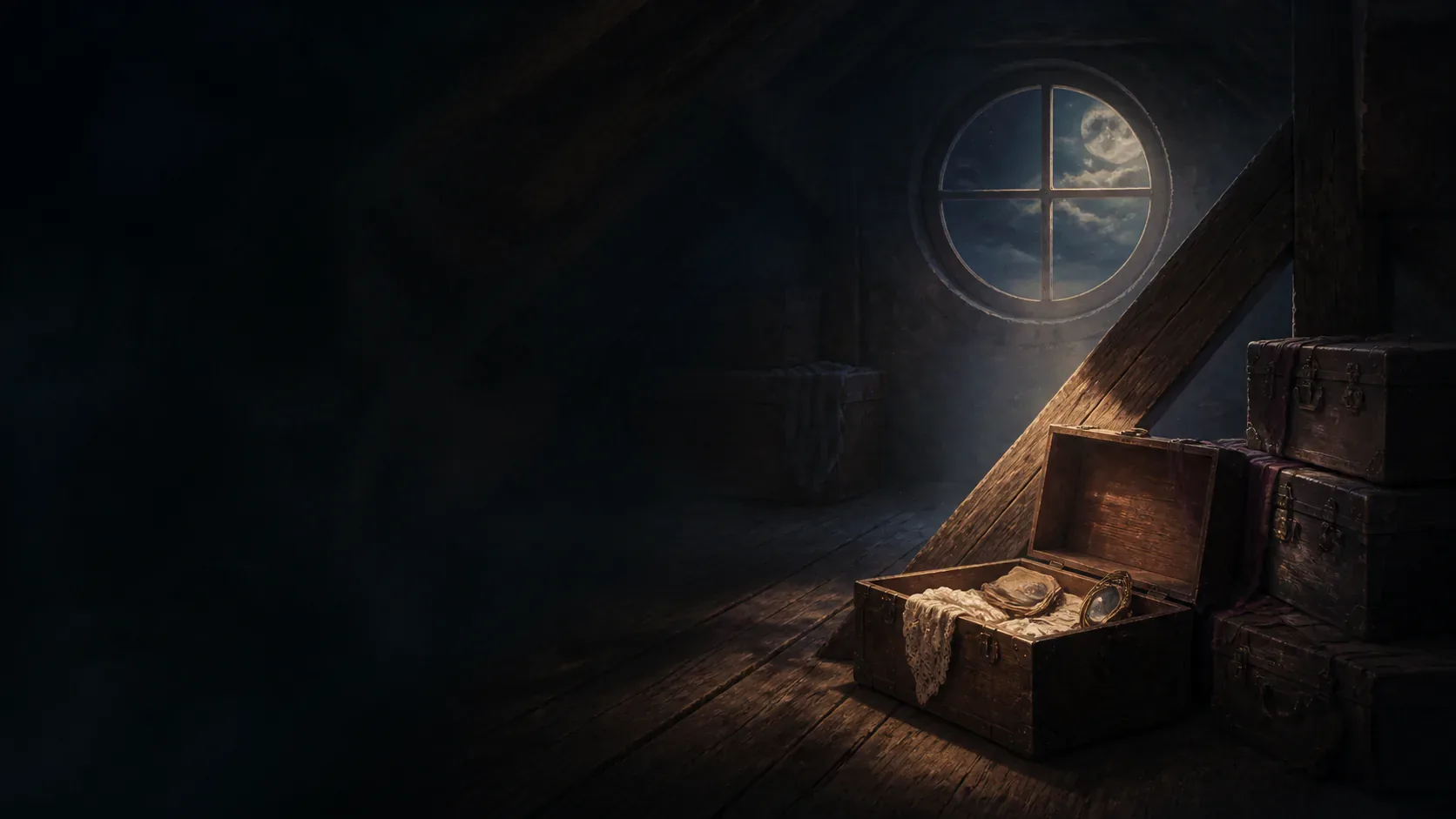
Dream symbol · Places & settings
What Does Dreaming About an Attic Mean?
Explore an attic dream through access, height, light, temperature, storage, objects, occupants, roof condition, repairs, and what you carried down.
A short answer
An attic dream can connect to storage, sorting, family objects, unused space, roof maintenance, work, or discovery. The attic type, route in, light, temperature, contents, condition, and what you chose to carry down matter more than a fixed meaning about wisdom or forgotten memories.
What an attic dream can mean
An attic dream has no single proven universal meaning. An unfinished storage loft, converted bedroom, hot crawl space, workshop, or room reached only through a hatch creates a different task. Start with the attic’s actual use, how you entered, and what drew your attention.
Popular symbolism sometimes places wisdom or higher thought in an attic because the room sits near the roof. Physical height does not create a proven psychological hierarchy. Your experience may involve storage, inherited belongings, insulation, repairs, childhood play, limited access, or a place known only from stories.
Dream research supports the incorporation and combination of recent, remote, and ordinary memories. A dreamed box can contain objects from several periods. That mixture is common dream construction, not proof that the attic holds an untouched or recovered memory.
Type and ownership shape the attic dream meaning
What kind of attic was it? Low unfinished space under sloping rafters, walk-in storage floor, finished loft, bedroom, studio, office, mechanical space, or impossible full house above the ceiling gives the room a different role. If you have never used an attic, media images may matter more than personal history.
Ownership affects permission. Was it part of your current home, a relative’s house, workplace, rented building, school, hotel, or unknown property? Did you have a right to enter, a job to perform, or a reason to hide your presence? A family attic can carry shared responsibility without belonging solely to you.
Notice whether the space felt old or newly built. Dust, labeled boxes, exposed beams, fresh walls, wiring, furniture, and windows can suggest use and period. Describe the evidence rather than assuming that old appearance means old memory.
The reason for entering gives the room a practical starting point. You may be looking for a suitcase, checking a leak, following a sound, helping someone move, hiding, or exploring a newly found entrance. These are different problems even when the rafters and boxes look alike. Record the first task and the moment it changed. Discovery, repair, retrieval, escape, and simple curiosity should not be compressed into one attic formula.
Also note who knew the attic existed. A private discovery, a familiar family space, and a room everyone else denies seeing create different social situations and different choices.
Hatches ladders and stairs make access visible
How did you get in? Pull-down ladder, fixed stairs, narrow hatch, folding steps, rope, elevator, hole in the ceiling, or an ordinary door changes effort and control. A ladder may require both hands. A hatch may need a tool or another person to hold it open.
Permission and timing can be part of access. Did someone give you a key, warn you not to enter, send you to retrieve something, or discover you already inside? Being unable to reach the opening differs from finding it locked. Falling through a ceiling removes choice entirely.
Plan the exit as well. Could you see the stairs, close the hatch, carry an object down, or call for help? Getting trapped above shifts the scene from discovery to dependence. Upward movement alone does not make the dream positive.
Height light heat and air define the room
Roof shape affects movement. Could you stand upright, crawl between beams, or walk through a space much larger than the house below? Sloping ceilings, exposed nails, weak floorboards, narrow edges, and deep insulation create specific physical limits.
Where did light come from? Small window, roof light, bare bulb, torch, gaps in boards, or unexplained glow changes visibility. Dust in a beam of light can make the air visible. Darkness may mean that you lack information about the space, not that the contents are psychologically hidden.
Temperature and air matter because attics can sit outside the main conditioned space. Was it hot, freezing, still, drafty, damp, or comfortable? The Department of Energy treats air sealing, insulation, penetrations, and moisture as practical attic concerns. Those facts help describe a maintenance scene but do not explain its dream meaning.
Storage sorting and clutter create decisions
What was stored, and how was it organized? Labeled shelves, sealed boxes, loose furniture, suitcases, seasonal decorations, documents, tools, and random piles create different levels of knowledge. A room can be full without feeling neglected when every item has a place.
Sorting makes the task active. Did you keep, discard, donate, repair, sell, hide, or search through objects? If the dream gave you a deadline, who set it? An empty attic after sorting may feel relieving, wasteful, unfinished, or simply ready for another use.
Clutter can block access to a window, roof problem, object, or exit. Identify what the clutter prevented rather than using it as a generic sign of a crowded mind. A single box in the wrong place may matter more than the total quantity.
Stored objects connect the room with particular times
Open one object at a time in your notes. A photograph, school uniform, toy, suitcase, chair, book, painting, letter, or inherited tool points toward a specific person, use, or period. Ask whether you recognized it and what you wanted to do with it now.
Objects can be altered. A photograph may show the wrong people, a suitcase may be too small inside, or furniture may belong to several homes at once. Preserve those dream changes. They show recombination rather than factual proof.
Inheritance can bring ownership questions. Was the item given to you, left without instructions, shared among relatives, or found in a stranger’s attic? The dream cannot determine legal ownership or another person’s wishes. Focus on the decision presented inside the scene.
Finished rooms occupants and animals change the use
Discovering a finished bedroom, office, studio, or apartment changes the attic from storage to occupied space. Did you know it existed? Was it maintained, abandoned, rented, or prepared for you? Extra space can bring possibility and responsibility at the same time.
If someone lived there, identify who they were and whether they had permission. A relative, stranger, worker, child, former owner, or imagined person creates a separate relationship. Their presence does not prove that anyone is hiding in waking life or that a family secret exists.
Birds, bats, insects, rodents, or pets near the roof have their own behavior and practical implications. Did they nest, enter through damage, guide you, frighten you, or ignore you? Do not reduce an animal to attic atmosphere.
Roof leaks beams and insulation create maintenance
Attics often provide access to the underside of a roof and to parts of a building envelope. A leak, missing tile, wet insulation, broken beam, loose wire, damaged vent, or daylight through a gap gives the dream a repair task. What evidence appeared first?
Did you know how to respond? Placing a bucket, moving boxes, calling a professional, tracing the leak, supporting a beam, or leaving the area creates different agency. A dream repair does not forecast real damage. Check a real building only when waking signs support it.
Maintenance can conflict with storage. You may need to move valued objects to reach a damaged area. Ask what you protected and what you allowed to get dirty, wet, or discarded. That choice is more specific than a general interpretation about neglected history.
Carrying something down completes the attic scene
What happened before you left? You may bring down one object, empty the room, close and lock the hatch, convert the space, leave everything in place, or become unable to descend. The outcome shows whether the task was discovery, sorting, repair, access, or decision.
Carrying something down changes movement. Was the object heavy, fragile, private, too large for the hatch, or easy to pass to another person? Did anyone wait below? The route that seemed simple on entry may become difficult when both hands are occupied.
If you left an item behind, was that deliberate? A clear choice differs from forgetting, being interrupted, or lacking permission. Repeated attic dreams may change one object, access route, roof condition, or decision at a time.
Questions to guide your interpretation
- What kind of attic was it, and whose building contained it?
- How did I enter, who controlled access, and could I leave safely?
- How did height, roof shape, light, temperature, and air affect movement?
- Was the room organized storage, clutter, living space, work area, or something else?
- Which object carried a specific person, use, or period for me?
- Who or what occupied the attic, and what did they actually do?
- Which leak, beam, insulation, roof, or repair detail required attention?
- What did I keep, discard, repair, carry down, or leave behind?
- Which recent sorting task, family object, building concern, or memory may have supplied the scene?
- Is there a waking decision about access, storage, maintenance, or responsibility that resembles this exact task?
Respond to real leaks, unsafe floors, wiring, heat, animals, or structural problems through waking evidence and qualified help. For interpretation, let the attic’s use, entrance, contents, condition, and outcome guide the reflection.
Further reading
Sources and context
- Characteristics of the memory sources of dreamsPLOS ONE via PubMed Central
- Reactions to Dream Content: Continuity and Non-continuityFrontiers in Psychology via PubMed Central
- Air Sealing Existing AtticsU.S. Department of Energy Building Science Education
Sources support factual background about dreaming and sleep. They do not validate a fixed symbolic meaning.